
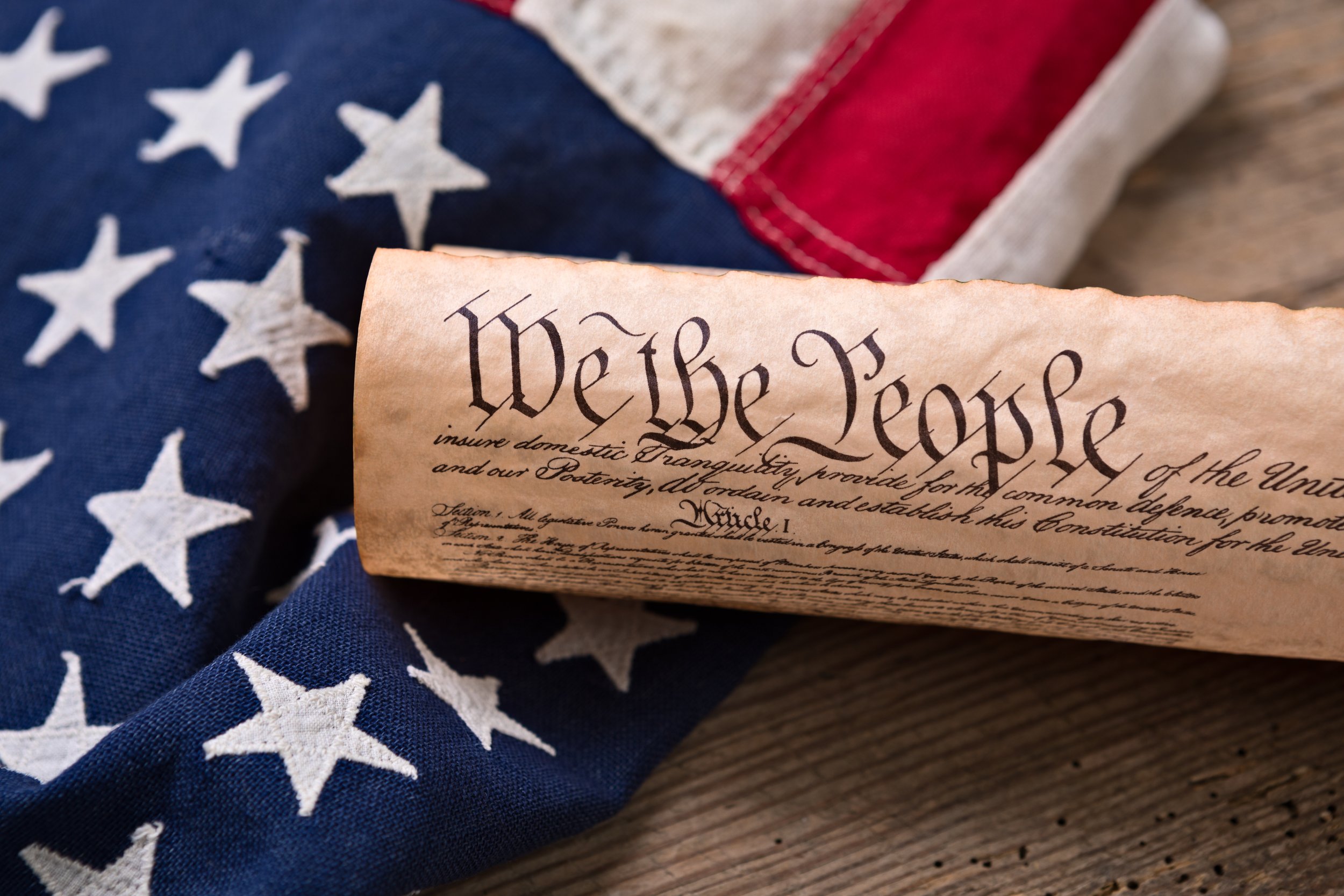
The Constitution of the United States is the supreme law of the land. Ratified in 1788, it established the framework for the federal government and defined the relationship between the national government and the states. However, the Founders understood that the document would need to evolve over time. Article V of the Constitution provides the process for proposing and ratifying amendments, requiring a two thirds vote in both houses of Congress for proposal and ratification by three fourths of the states.
Since its ratification, the Constitution has been amended 27 times. The first ten amendments, known as the Bill of Rights, were ratified together in 1791 to guarantee fundamental individual liberties. The remaining seventeen amendments have addressed issues ranging from the abolition of slavery and the expansion of voting rights to changes in government structure and procedure. Together, these 27 amendments reflect the ongoing effort of the American people to form a more perfect union.
This guide presents the exact text of every amendment, organized by historical era, followed by a detailed explanation in plain language. A free downloadable reference document is also available at the bottom of this article.
The Founding Era | 1791 to 1804 (Amendments 1 to 12)
The first twelve amendments were ratified during the earliest years of the American republic. The first ten, collectively known as the Bill of Rights, were ratified on December 15, 1791, in direct response to concerns that the original Constitution did not adequately protect individual liberties. The Eleventh and Twelfth Amendments addressed structural issues that emerged as the young government began to function.
First Amendment (1791)
"Congress shall make no law respecting an establishment of religion, or prohibiting the free exercise thereof; or abridging the freedom of speech, or of the press; or the right of the people peaceably to assemble, and to petition the Government for a redress of grievances."
The First Amendment protects five fundamental freedoms that are considered essential to a democratic society. The Establishment Clause prevents the government from creating an official state religion, while the Free Exercise Clause protects the right of individuals to practise their faith without government interference. Freedom of speech and of the press ensure that citizens and journalists can express ideas, criticize the government, and share information without fear of punishment. The rights to peaceable assembly and to petition the government guarantee that citizens can gather to express their views and formally request that the government address their concerns. The First Amendment is widely considered the cornerstone of American liberty.
Second Amendment (1791)
"A well regulated Militia, being necessary to the security of a free State, the right of the people to keep and bear Arms, shall not be infringed."
The Second Amendment protects the right of individuals to keep and bear arms. Its interpretation has been the subject of extensive legal debate. In District of Columbia v. Heller (2008), the Supreme Court held that the Second Amendment protects an individual right to possess firearms independent of service in a militia, including for purposes such as self defense within the home. In McDonald v. City of Chicago (2010), the Court extended this protection to apply against state and local governments through the Fourteenth Amendment.
Third Amendment (1791)
"No Soldier shall, in time of peace be quartered in any house, without the consent of the Owner, nor in time of war, but in a manner to be prescribed by law."
The Third Amendment was a direct response to the British practice of quartering soldiers in private homes during the colonial period. It prohibits the government from forcing homeowners to house soldiers during peacetime. In wartime, soldiers may only be quartered in accordance with procedures established by law. While this amendment is rarely litigated today, it reflects the broader constitutional principle of protecting the privacy and sanctity of the home.
Fourth Amendment (1791)
"The right of the people to be secure in their persons, houses, papers, and effects, against unreasonable searches and seizures, shall not be violated, and no Warrants shall issue, but upon probable cause, supported by Oath or affirmation, and particularly describing the place to be searched, and the persons or things to be seized."
The Fourth Amendment protects individuals against unreasonable searches and seizures by the government. It requires that search warrants be issued only upon probable cause, supported by a sworn oath, and must specifically describe the place to be searched and the items to be seized. This amendment is one of the most frequently litigated provisions of the Bill of Rights, particularly in criminal cases involving questions about the legality of police searches, wiretapping, digital surveillance, and the collection of electronic data.
Fifth Amendment (1791)
"No person shall be held to answer for a capital, or otherwise infamous crime, unless on a presentment or indictment of a Grand Jury, except in cases arising in the land or naval forces, or in the Militia, when in actual service in time of War or public danger; nor shall any person be subject for the same offence to be twice put in jeopardy of life or limb; nor shall be compelled in any criminal case to be a witness against himself, nor be deprived of life, liberty, or property, without due process of law; nor shall private property be taken for public use, without just compensation."
The Fifth Amendment contains several critical protections. The Grand Jury Clause requires that serious criminal charges be reviewed by a grand jury before a person can be tried. The Double Jeopardy Clause prevents a person from being tried twice for the same offence. The Self Incrimination Clause protects individuals from being forced to testify against themselves, which is the basis for "pleading the Fifth." The Due Process Clause guarantees that the government cannot deprive any person of life, liberty, or property without fair legal proceedings. The Takings Clause requires the government to provide just compensation when private property is taken for public use through eminent domain.
Sixth Amendment (1791)
"In all criminal prosecutions, the accused shall enjoy the right to a speedy and public trial, by an impartial jury of the State and district wherein the crime shall have been committed, which district shall have been previously ascertained by law, and to be informed of the nature and cause of the accusation; to be confronted with the witnesses against him; to have compulsory process for obtaining witnesses in his favor, and to have the Assistance of Counsel for his defence."
The Sixth Amendment guarantees a comprehensive set of rights to individuals accused of crimes. It ensures the right to a speedy trial so that the accused is not held in uncertainty for extended periods. The trial must be public and conducted by an impartial jury from the community where the crime occurred. The accused must be informed of the specific charges, has the right to confront and cross examine witnesses, can compel favourable witnesses to testify, and has the right to be represented by a lawyer. In Gideon v. Wainwright (1963), the Supreme Court ruled that this right to counsel applies to state criminal proceedings and that states must provide a lawyer to defendants who cannot afford one.
Seventh Amendment (1791)
"In Suits at common law, where the value in controversy shall exceed twenty dollars, the right of trial by jury shall be preserved, and no fact tried by a jury, shall be otherwise reexamined in any Court of the United States, than according to the rules of the common law."
The Seventh Amendment preserves the right to a jury trial in federal civil cases where the amount in controversy exceeds twenty dollars. While the twenty dollar threshold has not been adjusted for inflation, the amendment continues to guarantee jury trials in federal civil litigation. It also prevents appellate courts from re examining facts determined by a jury, except as permitted under common law rules. This amendment applies only to federal courts and has not been incorporated against the states.
Eighth Amendment (1791)
"Excessive bail shall not be required, nor excessive fines imposed, nor cruel and unusual punishments inflicted."
The Eighth Amendment places three restrictions on the criminal justice system. It prohibits courts from setting bail at an amount designed to be unaffordable. It prevents the government from imposing fines that are grossly disproportionate to the offence. Most significantly, it bans cruel and unusual punishments, which has been interpreted by courts to prohibit torture, barbaric punishments, and sentences that are vastly disproportionate to the crime committed. This amendment has been central to legal debates about the death penalty, prison conditions, and sentencing practices.
Ninth Amendment (1791)
"The enumeration in the Constitution, of certain rights, shall not be construed to deny or disparage others retained by the people."
The Ninth Amendment clarifies that the listing of specific rights in the Constitution does not mean that those are the only rights the people possess. It was included to address the concern that enumerating certain rights might be interpreted to imply that unlisted rights do not exist. The Supreme Court has cited the Ninth Amendment in cases involving the right to privacy and other unenumerated rights, affirming that the people retain fundamental rights beyond those explicitly stated in the Constitution.
Tenth Amendment (1791)
"The powers not delegated to the United States by the Constitution, nor prohibited by it to the States, are reserved to the States respectively, or to the people."
The Tenth Amendment is the foundation of federalism in the United States. It establishes that any powers not specifically granted to the federal government by the Constitution, and not prohibited to the states, are reserved to the state governments or to the people. This amendment reinforces the principle that the federal government is one of limited, enumerated powers, and that the states retain broad authority over matters within their own borders, including education, law enforcement, and local governance.
Eleventh Amendment (1795)
"The Judicial power of the United States shall not be construed to extend to any suit in law or equity, commenced or prosecuted against one of the United States by Citizens of another State, or by Citizens or Subjects of any Foreign State."
The Eleventh Amendment was ratified in response to the Supreme Court's decision in Chisholm v. Georgia (1793), which had allowed a citizen of South Carolina to sue the state of Georgia in federal court. The amendment establishes the principle of sovereign immunity, meaning that states generally cannot be sued in federal court by citizens of other states or by foreign nationals without the state's consent. This amendment reflects the importance of state sovereignty within the federal system.
Twelfth Amendment (1804)
"The Electors shall meet in their respective states, and vote by ballot for President and Vice-President, one of whom, at least, shall not be an inhabitant of the same state with themselves; they shall name in their ballots the person voted for as President, and in distinct ballots the person voted for as Vice-President, and they shall make distinct lists of all persons voted for as President, and of all persons voted for as Vice-President, and of the number of votes for each, which lists they shall sign and certify, and transmit sealed to the seat of the government of the United States, directed to the President of the Senate..."
The Twelfth Amendment revised the process for electing the President and Vice President. Under the original Constitution, electors cast two votes for President, and the runner up became Vice President. This system caused problems in the election of 1800, when Thomas Jefferson and his running mate Aaron Burr received the same number of electoral votes, throwing the election to the House of Representatives. The Twelfth Amendment requires electors to cast separate ballots for President and Vice President, preventing such confusion and allowing presidential candidates to run on a ticket with their chosen running mate.
The Reconstruction Era | 1865 to 1870 (Amendments 13 to 15)
The Reconstruction Amendments were ratified in the aftermath of the Civil War. They represent some of the most transformative changes to the Constitution, abolishing slavery, defining citizenship, guaranteeing equal protection under the law, and protecting voting rights regardless of race. These three amendments fundamentally reshaped the relationship between the federal government and the states and laid the groundwork for the civil rights movement of the twentieth century.
Thirteenth Amendment (1865)
"Section 1. Neither slavery nor involuntary servitude, except as a punishment for crime whereof the party shall have been duly convicted, shall exist within the United States, or any place subject to their jurisdiction.
Section 2. Congress shall have power to enforce this article by appropriate legislation."
The Thirteenth Amendment abolished slavery and involuntary servitude throughout the United States, with the sole exception of punishment for a crime following a lawful conviction. It was ratified on December 6, 1865, shortly after the end of the Civil War. Unlike most other constitutional provisions, the Thirteenth Amendment applies directly to private conduct, not just government action. It gave Congress the power to pass legislation enforcing the ban on slavery, which has been used to combat forced labour, human trafficking, and other forms of coerced servitude.
Fourteenth Amendment (1868)
"Section 1. All persons born or naturalized in the United States, and subject to the jurisdiction thereof, are citizens of the United States and of the State wherein they reside. No State shall make or enforce any law which shall abridge the privileges or immunities of citizens of the United States; nor shall any State deprive any person of life, liberty, or property, without due process of law; nor deny to any person within its jurisdiction the equal protection of the laws."
The Fourteenth Amendment is one of the most consequential provisions in the entire Constitution. Section 1 establishes birthright citizenship, guaranteeing that all persons born or naturalized in the United States are citizens. The Due Process Clause prevents state governments from depriving any person of life, liberty, or property without fair legal proceedings, and through a process known as "incorporation," the Supreme Court has used this clause to apply most of the Bill of Rights to the states. The Equal Protection Clause requires states to treat all persons equally under the law and has been the basis for landmark civil rights decisions, including Brown v. Board of Education (1954), which struck down racial segregation in public schools, and Obergefell v. Hodges (2015), which recognized the right to same sex marriage.
The remaining sections of the Fourteenth Amendment addressed post Civil War matters, including the apportionment of representatives, disqualification from office for those who engaged in insurrection, the validity of the public debt, and the grant of enforcement power to Congress.
Fifteenth Amendment (1870)
"Section 1. The right of citizens of the United States to vote shall not be denied or abridged by the United States or by any State on account of race, color, or previous condition of servitude.
Section 2. The Congress shall have power to enforce this article by appropriate legislation."
The Fifteenth Amendment prohibited the federal and state governments from denying the right to vote based on race, colour, or previous condition of servitude. It was ratified on February 3, 1870, and represented a critical step toward political equality for African Americans. Despite its ratification, many states used tactics such as poll taxes, literacy tests, grandfather clauses, and outright intimidation to prevent Black citizens from voting for nearly a century. It was not until the passage of the Voting Rights Act of 1965 that the federal government effectively enforced the Fifteenth Amendment's promise of equal voting rights.
The Progressive Era | 1913 to 1920 (Amendments 16 to 19)
The Progressive Era brought sweeping reforms to American governance. These four amendments reflected a growing demand for democratic accountability, economic fairness, social reform, and expanded voting rights. They fundamentally changed how the federal government raises revenue, how senators are elected, and who has the right to vote.
Sixteenth Amendment (1913)
"The Congress shall have power to lay and collect taxes on incomes, from whatever source derived, without apportionment among the several States, and without regard to any census or enumeration."
The Sixteenth Amendment authorized Congress to levy a federal income tax without apportioning it among the states based on population. Before this amendment, the Supreme Court had struck down a federal income tax in Pollock v. Farmers' Loan & Trust Co. (1895), ruling that it was a direct tax that had to be apportioned. The Sixteenth Amendment overturned that decision and provided the constitutional basis for the modern federal income tax system, which remains the primary source of revenue for the federal government.
Seventeenth Amendment (1913)
"Section 1. The Senate of the United States shall be composed of two Senators from each State, elected by the people thereof, for six years; and each Senator shall have one vote. The electors in each State shall have the qualifications requisite for electors of the most numerous branch of the State legislatures.
Section 2. When vacancies happen in the representation of any State in the Senate, the executive authority of such State shall issue writs of election to fill such vacancies: Provided, That the legislature of any State may empower the executive thereof to make temporary appointments until the people fill the vacancies by election as the legislature may direct.
Section 3. This amendment shall not be so construed as to affect the election or term of any Senator chosen before it becomes valid as part of the Constitution."
The Seventeenth Amendment established the direct popular election of United States Senators. Under the original Constitution, senators were chosen by state legislatures. This system was criticized for being vulnerable to corruption, political deadlock, and a lack of democratic accountability. The Seventeenth Amendment gave voters the power to choose their senators directly, bringing the Senate closer to the democratic ideals of the republic. It also provides a process for filling Senate vacancies through special elections and temporary gubernatorial appointments.
Eighteenth Amendment (1919)
"Section 1. After one year from the ratification of this article the manufacture, sale, or transportation of intoxicating liquors within, the importation thereof into, or the exportation thereof from the United States and all territory subject to the jurisdiction thereof for beverage purposes is hereby prohibited.
Section 2. The Congress and the several States shall have concurrent power to enforce this article by appropriate legislation.
Section 3. This article shall be inoperative unless it shall have been ratified as an amendment to the Constitution by the legislatures of the several States, as provided in the Constitution, within seven years from the date of the submission hereof to the States by the Congress."
The Eighteenth Amendment established the nationwide prohibition of alcohol. It banned the manufacture, sale, and transportation of intoxicating liquors for beverage purposes. The amendment was the culmination of the temperance movement, which had campaigned for decades against the social harms associated with alcohol. Congress enforced Prohibition through the Volstead Act of 1919, which defined "intoxicating liquors" and established penalties for violations. However, Prohibition proved difficult to enforce and led to the rise of organized crime, bootlegging, and widespread public disobedience. The Eighteenth Amendment is the only amendment in American history to have been repealed, by the Twenty First Amendment in 1933.
Nineteenth Amendment (1920)
"The right of citizens of the United States to vote shall not be denied or abridged by the United States or by any State on account of sex.
Congress shall have power to enforce this article by appropriate legislation."
The Nineteenth Amendment guaranteed women the right to vote. It was the culmination of the women's suffrage movement, which had fought for decades for political equality. Pioneers such as Susan B. Anthony, Elizabeth Cady Stanton, and Alice Paul led campaigns, organized marches, and endured imprisonment in the struggle for the vote. The amendment was ratified on August 18, 1920, effectively doubling the eligible voting population of the United States. It stands as one of the most significant expansions of democratic participation in American history.
The Modern Era | 1933 to 1992 (Amendments 20 to 27)
The final eight amendments span nearly six decades of American history, from the Great Depression to the end of the Cold War. They address presidential succession, the repeal of Prohibition, presidential term limits, voting rights for residents of Washington D.C. and eighteen year olds, the abolition of poll taxes, and congressional compensation. The Twenty Seventh Amendment, ratified in 1992, holds the distinction of having the longest ratification period of any amendment, more than 202 years after it was first proposed in 1789.
Twentieth Amendment (1933)
"Section 1. The terms of the President and Vice President shall end at noon on the 20th day of January, and the terms of Senators and Representatives at noon on the 3d day of January, of the years in which such terms would have ended if this article had not been ratified; and the terms of their successors shall then begin.
Section 2. The Congress shall assemble at least once in every year, and such meeting shall begin at noon on the 3d day of January, unless they shall by law appoint a different day."
The Twentieth Amendment is commonly known as the "Lame Duck Amendment." It moved the beginning of the presidential term from March 4 to January 20 and the beginning of congressional terms to January 3. Under the previous schedule, a defeated president or member of Congress would remain in office for four months after the election, creating a long "lame duck" period. The amendment also addressed what happens if a President elect dies before taking office and authorized Congress to address situations where neither a President elect nor a Vice President elect qualifies.
Twenty First Amendment (1933)
"Section 1. The eighteenth article of amendment to the Constitution of the United States is hereby repealed.
Section 2. The transportation or importation into any State, Territory, or possession of the United States for delivery or use therein of intoxicating liquors, in violation of the laws thereof, is hereby prohibited.
Section 3. This article shall be inoperative unless it shall have been ratified as an amendment to the Constitution by conventions in the several States, as provided in the Constitution, within seven years from the date of the submission hereof to the States by the Congress."
The Twenty First Amendment repealed the Eighteenth Amendment, ending Prohibition. It is the only amendment in American history that was ratified by state conventions rather than state legislatures, and it is the only amendment to repeal a previous amendment. Section 2 gave states the power to regulate the importation and use of alcohol within their own borders, which is why alcohol laws vary significantly from state to state. The repeal of Prohibition recognized that the experiment of banning alcohol had failed and had created more problems than it solved.
Twenty Second Amendment (1951)
"Section 1. No person shall be elected to the office of the President more than twice, and no person who has held the office of President, or acted as President, for more than two years of a term to which some other person was elected President shall be elected to the office of the President more than once."
The Twenty Second Amendment limits a person to being elected President no more than twice. If a person has served as President for more than two years of a term to which someone else was elected, they can only be elected once more. This amendment was a direct response to Franklin D. Roosevelt's unprecedented four terms as President. Although George Washington had established a two term tradition, there was no legal limit until this amendment was ratified. It ensures the regular transfer of executive power and prevents any individual from holding the presidency indefinitely.
Twenty Third Amendment (1961)
"Section 1. The District constituting the seat of Government of the United States shall appoint in such manner as the Congress may direct: A number of electors of President and Vice President equal to the whole number of Senators and Representatives in Congress to which the District would be entitled if it were a State, but in no event more than the least populous State; they shall be in addition to those appointed by the States, but they shall be considered, for the purposes of the election of President and Vice President, to be electors appointed by a State; and they shall meet in the District and perform such duties as provided by the twelfth article of amendment.
Section 2. The Congress shall have power to enforce this article by appropriate legislation."
The Twenty Third Amendment granted residents of Washington, D.C. the right to vote in presidential elections. Before this amendment, D.C. residents had no representation in the Electoral College despite paying federal taxes and being subject to federal laws. The amendment provides D.C. with a number of electors equal to the number it would have if it were a state, but no more than the least populous state. Currently, D.C. has three electoral votes. The amendment does not grant D.C. statehood or voting representation in Congress.
Twenty Fourth Amendment (1964)
"Section 1. The right of citizens of the United States to vote in any primary or other election for President or Vice President, for electors for President or Vice President, or for Senator or Representative in Congress, shall not be denied or abridged by the United States or any State by reason of failure to pay any poll tax or other tax.
Section 2. The Congress shall have the power to enforce this article by appropriate legislation."
The Twenty Fourth Amendment abolished the poll tax in federal elections. Poll taxes had been used, particularly in the South, as a tool to prevent poor and minority citizens from voting. By requiring payment as a condition of voting, these taxes effectively disenfranchised millions of Americans. The amendment was ratified during the civil rights era as part of the broader effort to remove barriers to political participation. In Harper v. Virginia Board of Elections (1966), the Supreme Court extended this principle to state elections, ruling that poll taxes violated the Equal Protection Clause of the Fourteenth Amendment.
Twenty Fifth Amendment (1967)
"Section 1. In case of the removal of the President from office or of his death or resignation, the Vice President shall become President.
Section 2. Whenever there is a vacancy in the office of the Vice President, the President shall nominate a Vice President who shall take office upon confirmation by a majority vote of both Houses of Congress.
Section 3. Whenever the President transmits to the President pro tempore of the Senate and the Speaker of the House of Representatives his written declaration that he is unable to discharge the powers and duties of his office, and until he transmits to them a written declaration to the contrary, such powers and duties shall be discharged by the Vice President as Acting President.
Section 4. Whenever the Vice President and a majority of either the principal officers of the executive departments or of such other body as Congress may by law provide, transmit to the President pro tempore of the Senate and the Speaker of the House of Representatives their written declaration that the President is unable to discharge the powers and duties of his office, the Vice President shall immediately assume the powers and duties of the office as Acting President..."
The Twenty Fifth Amendment clarified the line of presidential succession and established procedures for dealing with presidential disability. Section 1 confirmed that the Vice President becomes President, not merely Acting President, upon the death, resignation, or removal of the President. Section 2 provided a mechanism for filling a vacancy in the vice presidency, which was used when Gerald Ford was appointed Vice President after Spiro Agnew's resignation in 1973, and again when Nelson Rockefeller was appointed after Ford became President. Sections 3 and 4 address presidential disability, allowing the President to voluntarily transfer power to the Vice President or, in cases where the President is unable or unwilling to do so, allowing the Vice President and a majority of the Cabinet to declare the President incapacitated.
Twenty Sixth Amendment (1971)
"Section 1. The right of citizens of the United States, who are eighteen years of age or older, to vote shall not be denied or abridged by the United States or by any State on account of age.
Section 2. The Congress shall have the power to enforce this article by appropriate legislation."
The Twenty Sixth Amendment lowered the voting age from twenty one to eighteen. It was ratified during the Vietnam War era, when the argument that eighteen year olds were old enough to be drafted and serve in combat but not old enough to vote became politically compelling. The rallying cry "old enough to fight, old enough to vote" captured the sentiment of a generation. The amendment was ratified in just 107 days, the fastest ratification of any constitutional amendment. It extended the right to vote to millions of young Americans and remains a testament to the power of civic engagement.
Twenty Seventh Amendment (1992)
"No law varying the compensation for the services of the Senators and Representatives shall take effect until an election of Representatives shall have intervened."
The Twenty Seventh Amendment prevents members of Congress from giving themselves an immediate pay raise. Any change to congressional compensation cannot take effect until after the next election of Representatives, giving voters the opportunity to weigh in. This amendment has a remarkable history. It was originally proposed by James Madison in 1789 as part of the original batch of amendments sent to the states alongside the Bill of Rights, but it was not ratified at the time. It lay dormant for nearly two centuries until a college student named Gregory Watson wrote a paper in 1982 arguing that it could still be ratified. Watson launched a campaign that ultimately succeeded when the amendment was ratified on May 7, 1992, more than 202 years after it was first proposed.
Why the Amendments Matter
The 27 amendments to the United States Constitution represent the evolving aspirations of the American people. From the protection of individual liberties in the Bill of Rights to the expansion of voting rights and the reform of government institutions, each amendment reflects a moment when the nation chose to update its founding document to better serve the principles of freedom, equality, and justice.
Understanding these amendments is essential for every citizen. They define your rights in encounters with law enforcement, your freedom to speak and worship as you choose, your right to vote and participate in the democratic process, and the limits on government power. Knowledge of your constitutional rights is the first step toward exercising them effectively.
Download the 27 Amendments of the US Constitution
Download a free reference document containing all 27 Amendments of the United States Constitution. Click here to download the 27 Amendments (PDF).
How a Personal Legal Service Plan Can Help
Understanding your constitutional rights is important, but knowing how to exercise them when they are at stake is equally critical. A Personal Legal Service Plan gives you access to a dedicated law firm that can provide legal advice when you need it most. Whether you are facing a criminal charge, dealing with a government agency, or believe your rights have been violated, having a lawyer to call makes a significant difference.
Plan members can consult with a lawyer about any legal matter, receive guidance on civil rights issues, get help understanding how the Constitution applies to their situation, and access legal representation for covered matters. Legal protection should not be a privilege reserved for those who can afford to pay hundreds of dollars an hour. A Personal Legal Service Plan makes legal support accessible and affordable for every American.
Ready to Get Protected?
Get affordable legal protection today. Choose your location to explore Personal Legal Service Plans.